Webflow vs Framer: Which One Should Your SaaS use in 2026?

Adrian KuleszoCo-founder
Table of contents
This comes up constantly. Founders picking a platform for their marketing site, design teams debating internally, startups inheriting a Framer site from an agency and wondering whether to stay or migrate. Both platforms have matured significantly in the last two years, and the honest answer to which is better has become more nuanced than most comparison posts will tell you.
We build on both at DesignMe. We’ve shipped marketing sites, landing pages, and campaign pages for companies like Seamless.AI, N3XT, and GoHighLevel across both platforms. Here’s what we’ve actually learned.
The Short Version
Framer is faster to get something beautiful live. Webflow gives you more control over everything that matters at scale: CMS, SEO, logic, integrations. If you’re pre-Series A and moving fast, Framer is often the right call. If you’re Series A and beyond, building a content engine, or need the site to carry serious commercial weight, Webflow is almost always where you end up.
We’ve migrated a meaningful number of clients from Framer to Webflow in the last year, and the reasons are consistent. Not because Framer is bad, it isn’t, but because Framer sites tend to hit a ceiling around the same time companies start scaling.
What Framer Gets Right
Design freedom at speed. Framer’s canvas-based editor is genuinely fast for designers who know it. Animations that would take hours to configure in Webflow can be done in Framer in minutes. The output reflects that: Framer sites often have a distinctive, high-motion quality that’s hard to achieve at the same speed elsewhere.
Handoff from Figma. The workflow from Figma to Framer is tighter than Figma to Webflow. For design-led teams who want to go from comp to live quickly, Framer removes friction that Webflow adds.
Lower learning curve. A designer who’s never used either can become productive in Framer faster than Webflow. The interface is more intuitive for pure design tasks.
Templates. Framer’s template ecosystem has grown significantly. For early-stage companies that need something high-quality fast without a large agency budget, Framer templates are genuinely competitive.
Where Framer Falls Short
CMS limitations. Framer’s CMS has improved but is still notably behind Webflow for content-heavy sites. If you’re building a blog, resource library, case study collection, or anything that needs structured content at volume, Webflow handles it more cleanly. Collections, references, dynamic filtering: Webflow has had years to mature here.
SEO control. Both platforms are capable of ranking, but Webflow gives you more granular control over the things that matter, custom meta structures, 301 redirects, canonical tags, schema markup, sitemap customisation. For companies treating SEO as a channel, this gap matters. Several clients we’ve moved from Framer to Webflow cited SEO control as the primary reason.
Integrations and logic. Webflow connects more cleanly with the tools funded SaaS companies actually use: HubSpot, Marketo, Segment, analytics stacks. Framer’s integration layer is thinner.
Editing for non-designers. If a marketing manager or content team member needs to update the site without touching code or asking a designer, Webflow’s editor is considerably friendlier. Framer still largely assumes the person editing knows what they’re doing visually.
What Webflow Gets Right
CMS that actually scales. Webflow’s CMS is the clearest advantage for growing companies. Multi-reference fields, dynamic pages, conditional visibility, filtered collections, it handles the kind of content architecture that a scaling SaaS marketing site actually needs.
SEO infrastructure. Out of the box, Webflow gives you clean semantic HTML, fast load times, and granular control over every technical SEO element. For companies investing in organic as a channel, this foundation matters more than most platform comparisons acknowledge.
The Editor. Non-technical team members can update copy, swap images, and manage CMS content without ever opening the Designer. For companies where the website is a living asset that the marketing team needs to own, this is significant.
Ecommerce and forms. If there’s any transaction layer on your site, even a simple form with complex logic: Webflow handles it with more control and flexibility.
Longevity. Webflow has been around longer, has a larger ecosystem, more third-party integrations, and a larger pool of developers and agencies who can work with it. If you build on Webflow, finding talent to maintain or extend the site is straightforward.
Where Webflow Falls Short
Learning curve. Webflow rewards investment. The first few weeks on the platform are genuinely harder than Framer, and a designer who’s only used Webflow for simple marketing pages will struggle to unlock its full capability without experience.
Animation complexity. Webflow’s interaction and animation tools have improved substantially, but producing the kind of high-fidelity motion design that Framer makes easy still takes more time and expertise in Webflow. It’s achievable, it just costs more in hours.
Pricing. Webflow’s pricing structure is more complex than Framer’s. Depending on your CMS usage, team size, and plan, costs can scale in ways that catch companies off guard. Worth modelling before you commit, our Webflow pricing guide and Framer pricing guide lay out the real cost of each.
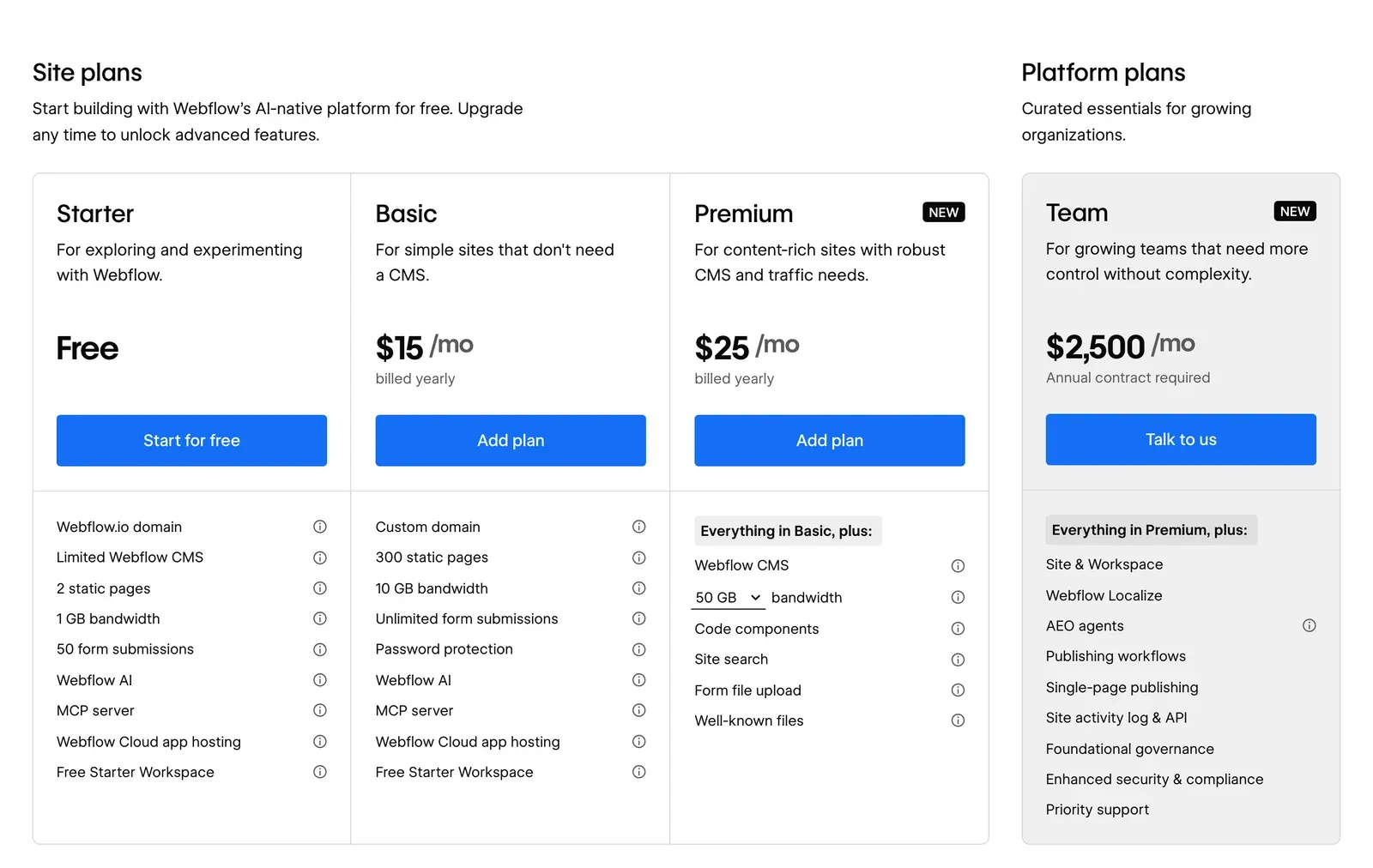
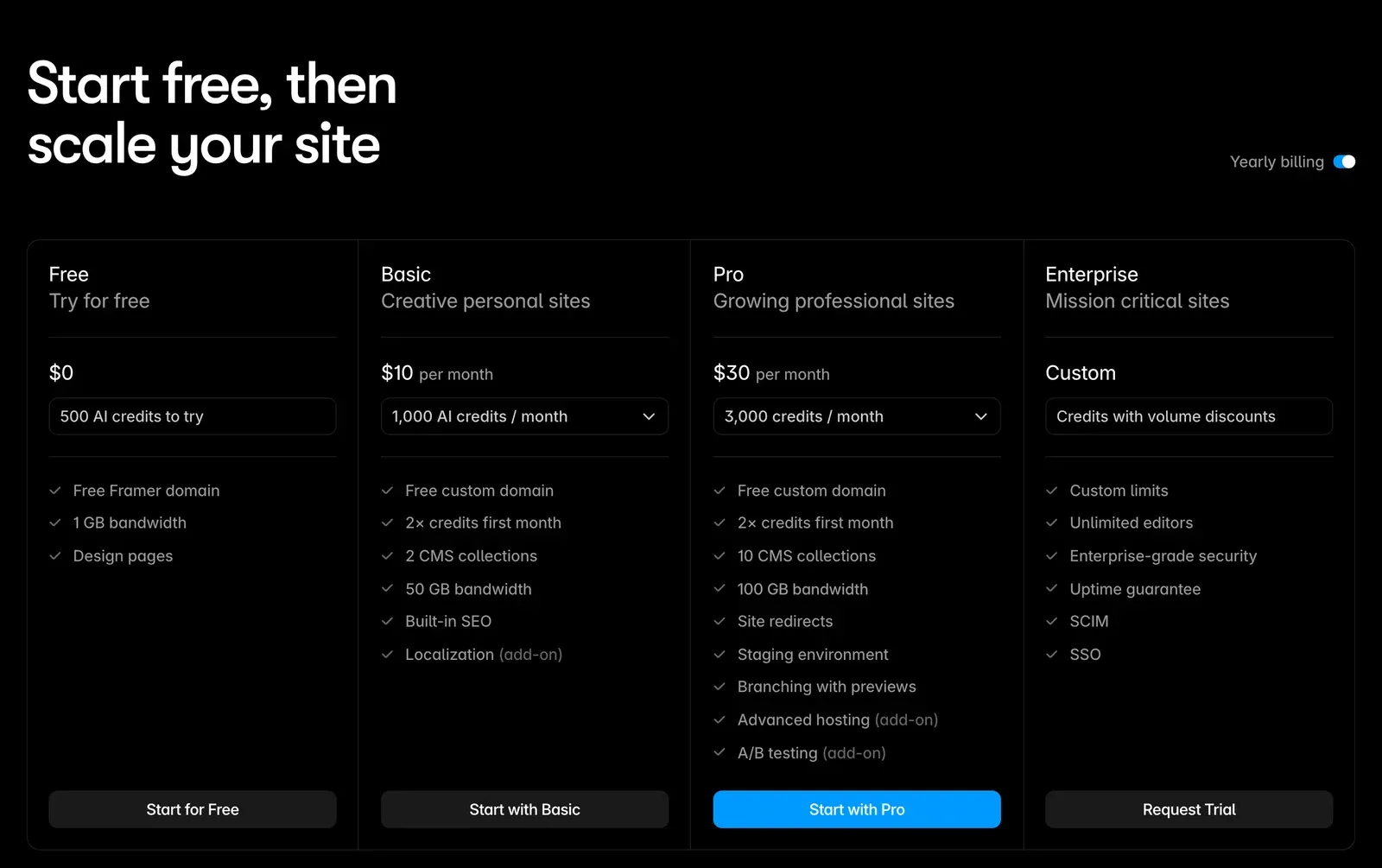
| Factor | Framer | Webflow |
|---|---|---|
| Design speed and motion | Animations in minutes, high-motion sites | Achievable, costs more in hours |
| Figma handoff | Tighter workflow | More friction |
| Learning curve | Lower, productive faster | First weeks are harder |
| CMS | Improved, still behind for content-heavy sites | Multi-reference fields, dynamic pages, filtered collections |
| SEO control | Capable of ranking | Granular meta, 301s, canonicals, schema, sitemap |
| Integrations | Thinner layer | HubSpot, Marketo, Segment, analytics stacks |
| Non-designer editing | Assumes the editor knows design | Editor for copy, images and CMS content |
| Pricing | Simpler structure | More complex, can scale unexpectedly |
The Migration Question
If you’re currently on Framer and wondering whether to migrate to Webflow, the decision usually comes down to three things.
Content volume. If you’re publishing more than a handful of posts a month or planning to build a resource library, the CMS gap starts to create real friction on Framer. Webflow is the cleaner long-term choice.
SEO maturity. If SEO is a growth channel and you need granular control, migrate. If it’s not a priority yet, the cost of migration isn’t justified.
Team editing needs. If anyone other than a designer needs to touch the site regularly, Webflow’s Editor is meaningfully better for that use case.
Migrations we’ve run in the last year have typically taken two to four weeks for a Framer-to-Webflow move depending on the site’s complexity. The process is: audit the existing Framer site, map the component and CMS architecture, rebuild in Webflow with SEO redirects configured, QA, and deploy. Done well, the site comes out cleaner on the other side, migrations are also a useful moment to improve information architecture and content strategy that’s accumulated debt. (If you’re coming from WordPress rather than Framer, the WordPress to Webflow or Framer decision guide is the better starting point.)
- Audit Review the existing Framer site.
- Map The component and CMS architecture.
- Rebuild In Webflow, with SEO redirects configured.
- QA Check the rebuilt site before it goes live.
- Deploy Launch on Webflow.
Platform by Stage
Pre-seed / bootstrapped: Framer. Fast, relatively affordable, looks great with the right template. You’ll likely outgrow it, but that’s fine.
Seed: Either works, but lean toward Webflow if you’re planning content marketing seriously or your team needs to update the site without design involvement.
Series A and beyond: Webflow. The CMS, SEO infrastructure, and editor flexibility all matter at this stage, and the investment in building it properly pays back quickly.
What We Recommend
At DesignMe we’re platform-agnostic in principle, but practically we build the majority of our client sites on Webflow. The reason is straightforward: our clients are mostly Series A to Series D B2B SaaS companies, and at that stage the CMS, SEO control, and marketing team editability that Webflow provides outweighs Framer’s speed advantages.
For campaigns, landing pages, and early-stage work, we still use Framer. It’s the right tool for that use case.
The question isn’t which platform is better in the abstract, it’s which platform is right for where your company is and where it’s going in the next 18 months. Get that answer right and the tool choice follows naturally. And if the platform you’re actually trying to leave is WordPress, see Webflow vs WordPress and our SaaS website design cost breakdown for what the rebuild involves.
DesignMe builds on Webflow and Framer for funded B2B SaaS and AI companies. If you’re deciding between platforms, planning a migration, or starting a new build, we’re happy to give a direct recommendation based on your setup:
Want us to do it?Our website migration service