Product design

Product design for complex software

We design SaaS platforms, AI tools and mobile apps that are easier to use, from a first MVP to a mature product used by thousands of people.

Worked on products for tech teams like

Selected work

Products we helped shape before their next growth stage

From MVPs to live platforms, we design flows, screens, and systems that help users understand what to do next.

Our product process

From messy flow to product experience ready to build.

We make the product experience easier to understand and easier to ship.

Week 1

Product audit

We review the product, users, flows, competitors, goals and analytics, and find where people get stuck.

Typical outputs:

  1. 01Product audit
  2. 02Competitor review
  3. 03Flow notes & UX issues
  4. 04Product sprint priorities

What we fix first

Where products usually lose people.

An audit ranks every issue by impact and effort. These are the places it most often points to first.

  • Onboarding

    Long sign-ups people quit, and first sessions that never reach the moment the product clicks.

  • Core flows

    The everyday task people came for, buried under years of features and extra steps.

  • Activation

    How fast a new user gets to the first win, and what stands in the way.

  • Empty and error states

    A dashboard with no next step, or an error that doesn’t say what to do. Real users hit these daily.

  • Roles that share one flow

    Admins, members or parents squeezed into a flow built for someone else, when each needs their own.

  • Design system drift

    Five button styles and three ways to do the same thing slow your team down and confuse users.

Case log

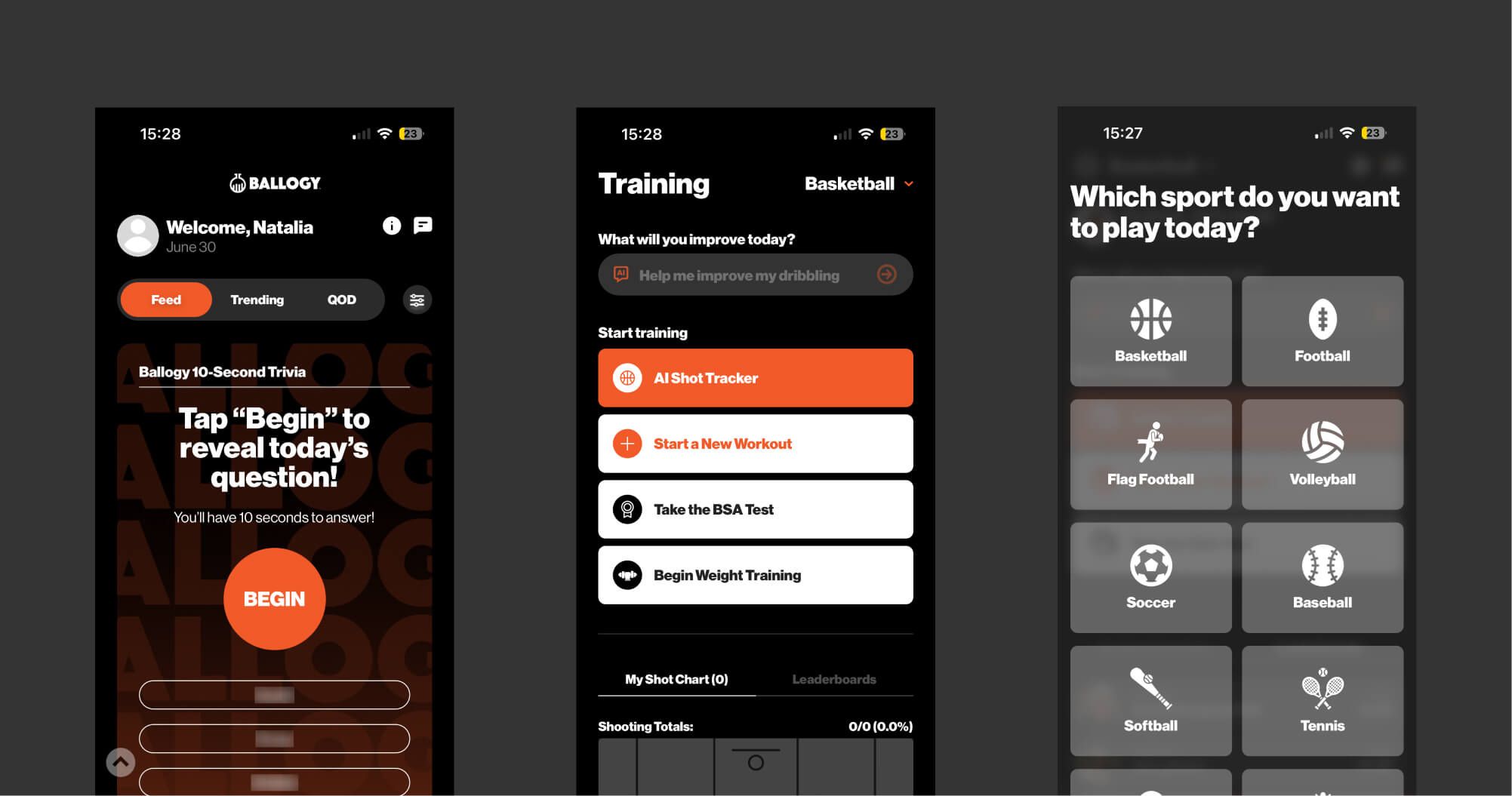
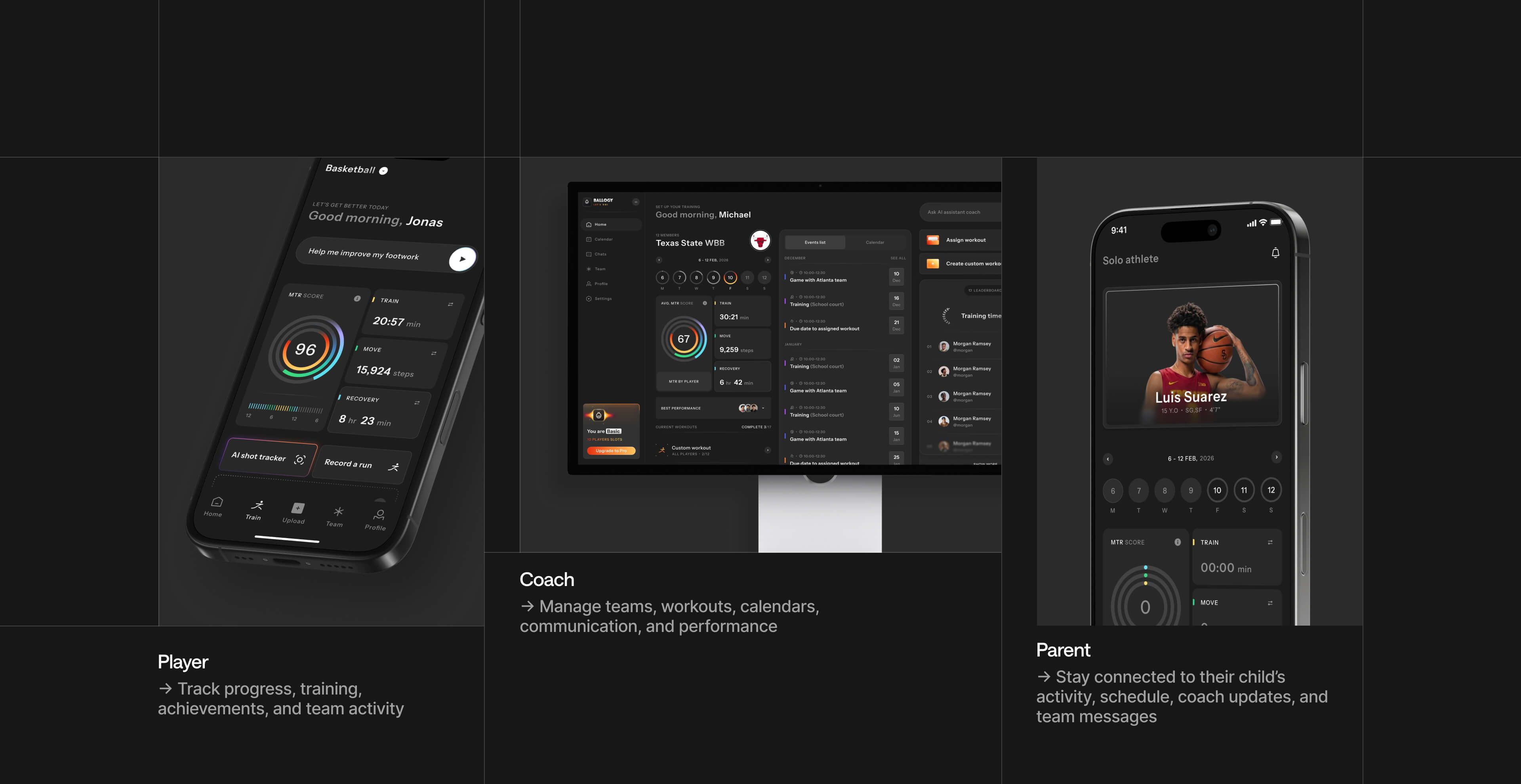
How we redesigned Ballogy’s athlete app.

Ballogy came to us with a live app, real users and years of features. This is what the work changed, flow by flow.

How it grew
  1. Audit

    It started with an audit of the live app and where new users dropped off.

  2. Redesign

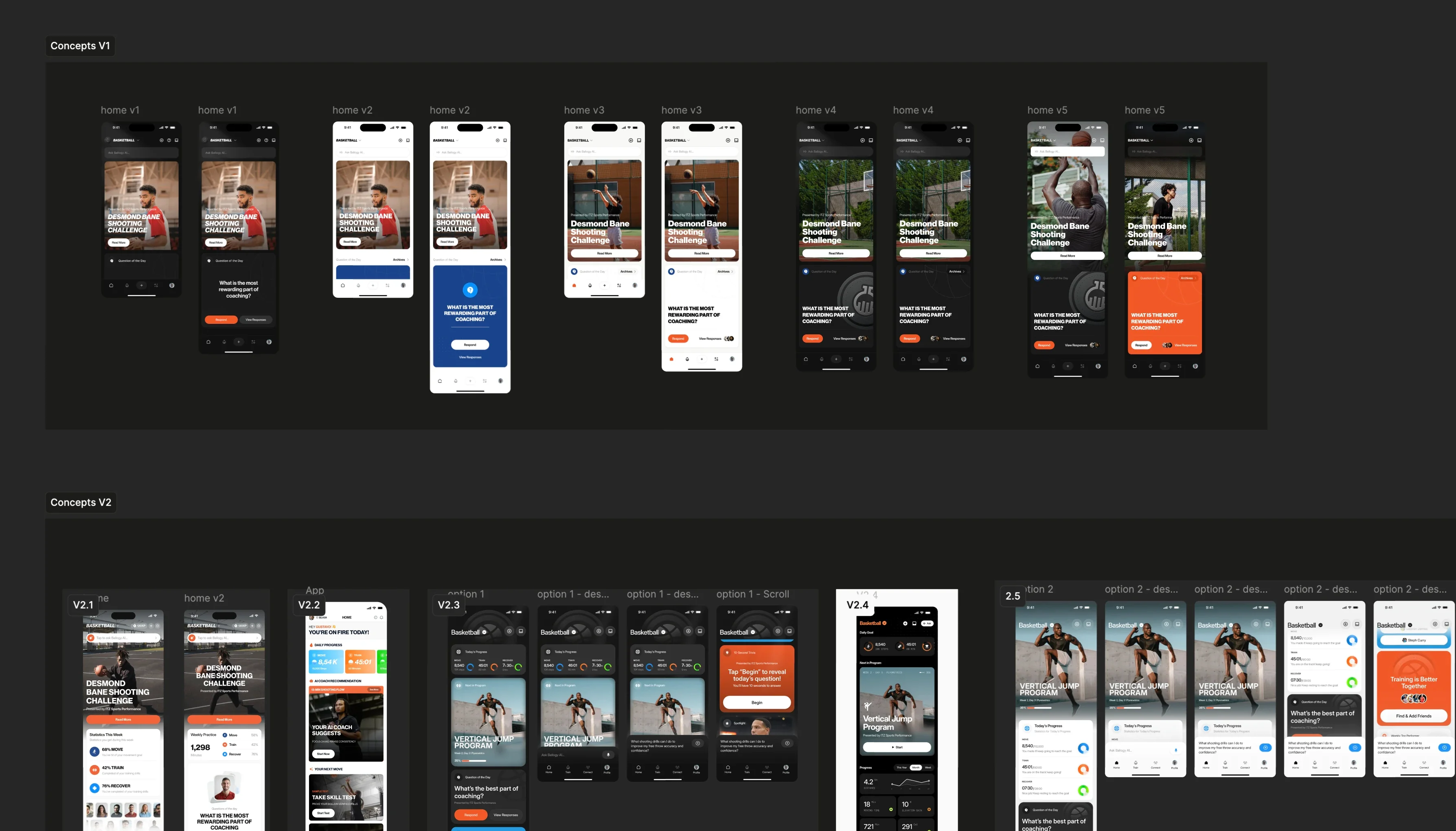
    Every flow redesigned over 9+ months: onboarding, home, feed, training and profiles.

  3. Rebuild

    Then a focused 3-month rebuild of the iOS and Android frontend.

What changedBallogy, 300K+ athletes
What changed: Ballogy, 300K+ athletes
WhereWhat we foundWhat we changed
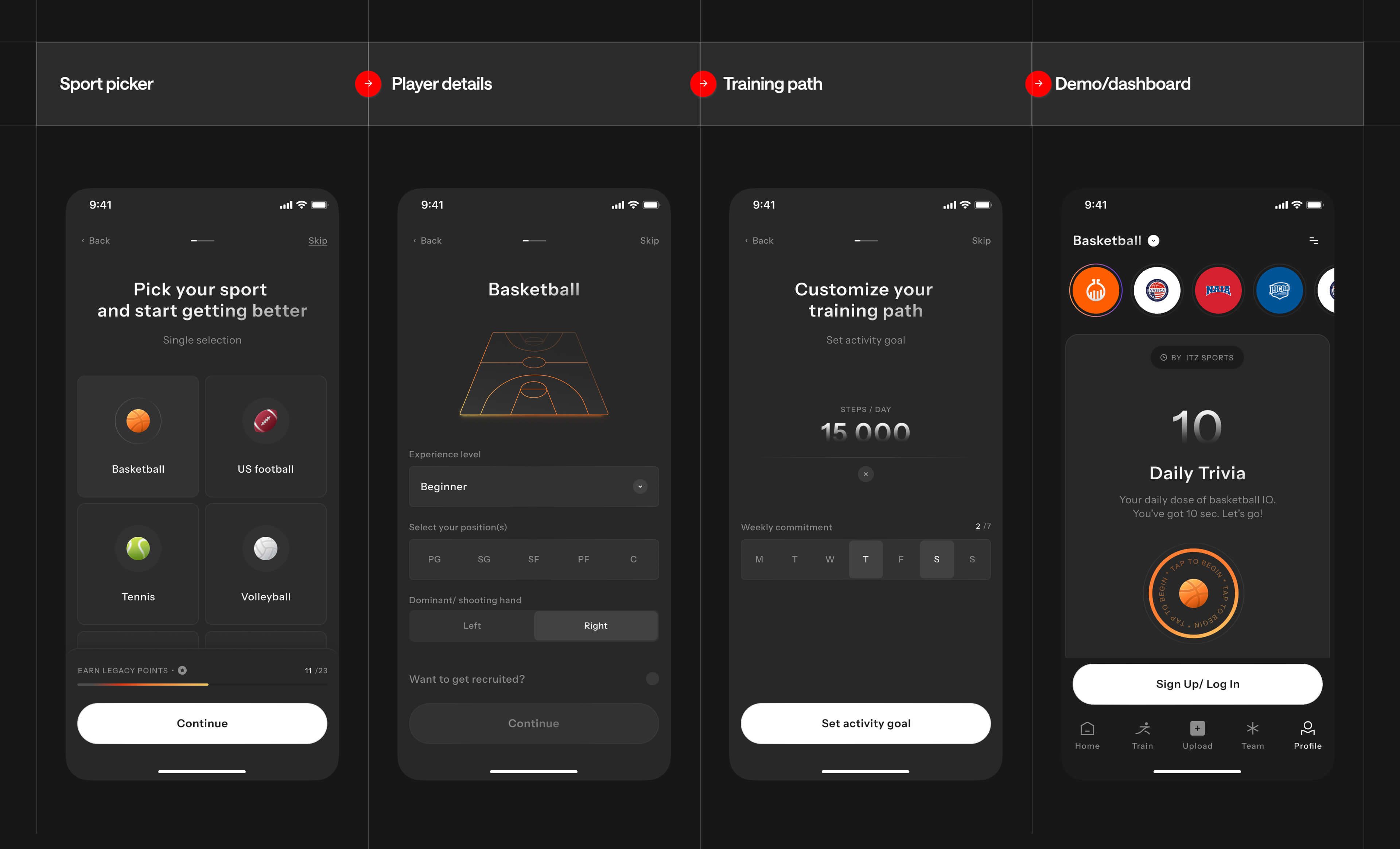
OnboardingA long onboarding that new users dropped out ofA clickable demo with sample data, before anyone creates an account
SportsA basketball-first app that had to stretch to 18 sportsSport, position, level and weekly goal picked in the first screens
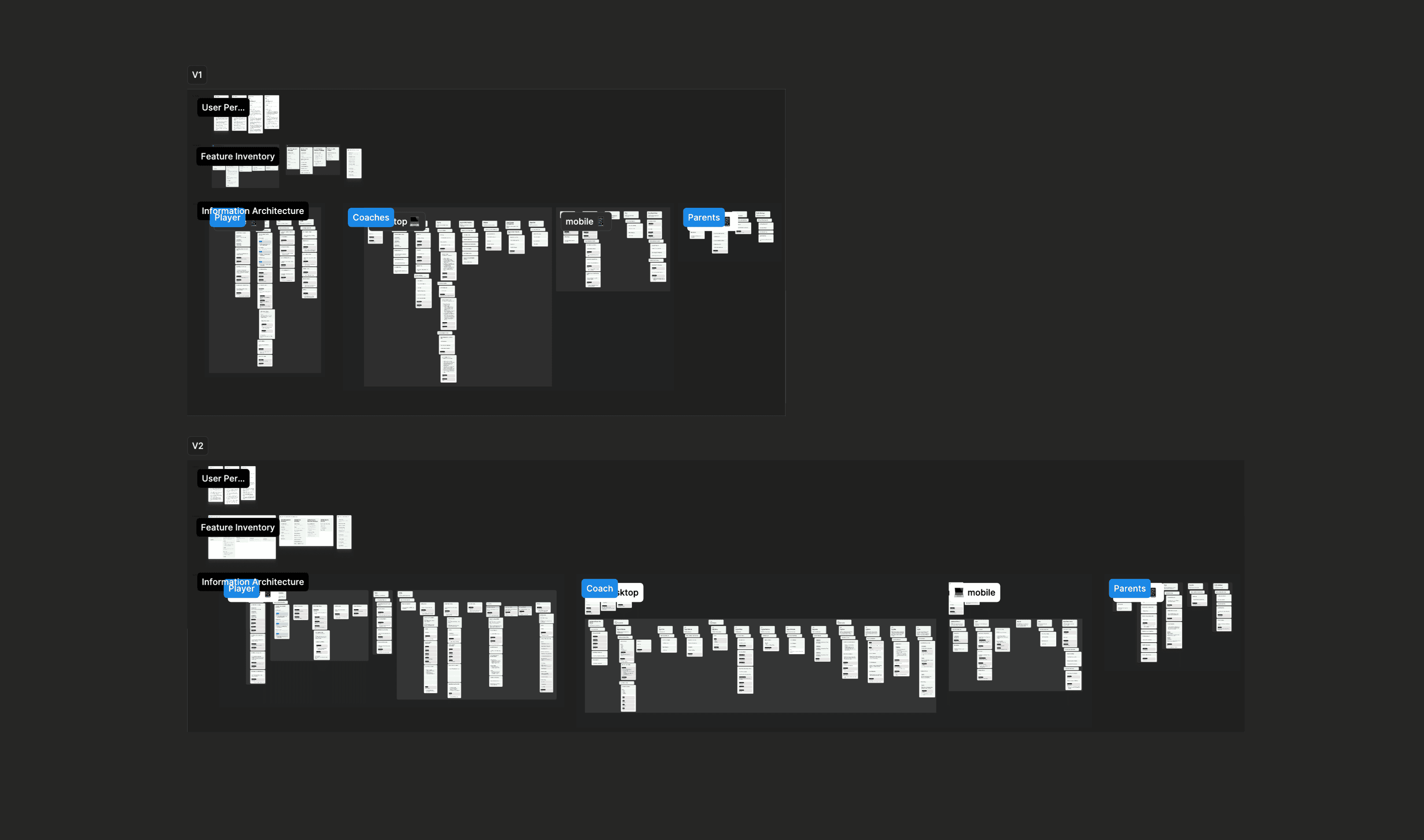
RolesPlayers, coaches and parents in one shared structureThree purpose-built journeys, each with its own front door
ParentsParents set up as a copy of the playerA parent role, linked to the child by access code and confirmation
CoachesYears of features layered on top of each otherFive core workflows in one place, plus an AI coach that suggests drills
Read the Ballogy case study

What we deliver

A product system your team can build on.

Flows, screens, states and components, designed together and ready for your engineers.

  • UX audit

    A review of the current product that finds where users get stuck and ranks what to fix first.

  • User flows and IA

    Journeys, navigation, onboarding and the logic between screens, mapped before any UI.

  • Wireframes

    Key screens solved for structure, hierarchy and states before the final visual layer.

  • Product UI

    Dashboards, workflows, tables, forms, onboarding and mobile screens, designed in high fidelity.

  • Design system

    Reusable components, variants, tokens and rules in Figma that keep the product consistent.

  • Developer-ready handoff

    Organised Figma files, documented states, responsive notes and design QA during the build.

Typical engagements

Product design shaped around the stage you’re in.

Some teams need a cleaner MVP. Others need a full product redesign, design system cleanup, or ongoing product support.

MVP product design

For turning an idea or prototype into a product ready to test or launch.

  • New SaaS products
  • AI tools & chat-based interfaces
  • Web app interfaces
  • B2C and B2B mobile apps
  • Founder-led MVPs
  • Vibe-coding cleanups

Product redesign

For a product that has grown outdated, inconsistent or hard to use.

  • New features built into existing flows
  • SaaS dashboards
  • B2B platforms
  • Complex web app interfaces
  • B2C and B2B mobile apps
  • Complex workflows

Product partner

For ongoing support on new features, experiments and design systems.

  • Fast-moving product teams
  • SaaS startups and scale-ups
  • AI product teams
  • Roadmap support
  • UX and UI product cleanup
  • Design system growth

Why DesignMe

We design products with business and users in mind.

A good interface has to look sharp, but it also has to explain itself, reduce friction, support the roadmap, and make sense to engineers.

Built for complex products
We work with SaaS, AI, fintech, mobile apps, and technical platforms where the hard part is making complexity feel clear.
UX and UI stay connected
We do not treat wireframes and visual design as separate worlds. The logic, layout, copy, and UI decisions are shaped together.
Designed for implementation
We think about components, states, edge cases, responsive behavior, and developer handoff from the start.
AI-assisted speed
We use AI for research, UX exploration, flow mapping, content, QA, and edge-case thinking, but the final decisions stay senior-led.
Close to your product team
We can work with founders, PMs, engineers, marketers, and internal designers inside the tools your team already uses.

Want more examples?

A few of our recent product designs.

Product design showcase 1

Proof

Product work backed by real proof.

  • 5.0/5

    Top rated agency on Clutch

  • #1

    App launch in Germany

    A large-scale MVP design system behind a record-breaking consumer app.

  • 4.8/5

    6500+ ratings on App Store

  • 50+

    Tech brands trusted us

  • 300k+

    User app rebuild for Ballogy

    A sports performance app for athletes, coaches and teams, on mobile and web.

  • Design + build

    We know both sides

    We know what happens after Figma, because we build the components too.

Tools and workflow

The tools change. The standard doesn’t.

We use the setup that helps your team move faster, communicate clearly, and ship with fewer gaps between design and build.

Design

  • Figma
  • Figjam
  • After Effects
  • Lottie

Collaboration

  • Slack
  • Loom
  • Google Meet
  • Notion

Development context

  • React
  • Next.js
  • Tailwind
  • Storybook

Analytics and feedback

  • Posthog
  • Hotjar

Testimonials

Words from the teams we’ve worked with

“We set new launch records in Germany. DesignMe's super modern and user-friendly design for zave.it was a key factor in the app’s extremely warm reception.

Users within 3 months of launch
300k+
From 6500+ App Store reviews
4.8/5.0
Dominik OppeltCEO of zave.it

“Not only can they can craft a great UI, they don't shy away from asking questions or politely challenging assumptions in order to arrive at the best-possible UX.

From an idea to the MVP launch
3 months
Web and mobile screens produced
200+
Mike O'NeillFounder @TravelWith

“We’ve also received good reception from our partners and current customers. In fact, our app store rating has increased to 4.7 from 4.3.

Users on the live app
300K+
Raised (PitchBook)
$17.2M
Jordan GreenCOO, Ballogy Inc

“Working with DesignMe feels like having a design team embedded inside Quotient. Their design sense, responsiveness, and ability to iterate quickly make them an ideal partner as we grow.”

Raised by Quotient
$5M
Embedded growth partnership
18+ months
Max DavishCo-Founder and CTO

“DesignMe has provided our startup with significant leverage.

Series A funding
$11M
To launch the new website
8 weeks
Pri PatelFounding Designer

More reviews onClutch (opens in a new tab)

Faqs

Questions on product design

Adrian

Still having more questions?

Send us your product, current flows, goals, and what needs to change. We’ll help you map the right scope, team, timeline, and next steps.

What does a product design agency do?

A product design agency designs the software itself: user flows, screens, states and components for web apps, SaaS platforms and mobile apps. DesignMe covers the full path from UX audit and wireframes to product UI, design systems and developer handoff.

How do you get up to speed with our product?

DesignMe starts by reviewing the current product, user flows, business goals, analytics, support notes and team feedback, and maps the areas that feel unclear or painful before changing any UI.

Can you work with our product managers and engineers?

Yes. DesignMe works directly with founders, PMs, engineers and in-house designers. We join your Slack, work in Figma, leave async updates and recorded walkthroughs, and prepare handoff notes so the team stays aligned.

How do you handle complex flows and edge cases?

We map the core journey first, then design every state around it: permissions, errors, empty states, loading states and the small details that often get missed. Much of the real product quality lives in those states.

Do you redesign screens or improve the UX?

Both. Sometimes the UI only needs polish; often the flow itself is the problem. DesignMe looks at structure, hierarchy, copy, logic and states before making screens look better.

Can you work with our existing design system?

Yes. DesignMe can use your current design system, clean it up, extend it with missing components and patterns, or rebuild it only if it is slowing the team down.

How long does a product design project take?

A typical product design project runs from a product audit in week 1 to product UI around weeks 4 to 8, then handoff and QA. Timing depends on the number of flows, screen complexity and how quickly decisions are made.

Can you help after the designs are handed off?

Yes. DesignMe supports implementation reviews, answers developer questions, adjusts edge cases and checks that the shipped product matches the intended experience.

How do you price product design work?

Product design is priced by scope: the number of flows, screen complexity, design system needs and how much support you need during the build. We usually recommend starting with the highest-impact area first.

Can you be our ongoing product design partner?

Yes. Many teams keep DesignMe on for new features, roadmap work, UX improvements, design system growth and implementation QA, working as part of the product team.

You've reached the end, so now…

Tell us what you’re building.

We’ll help you map the right scope, team, timeline, and next steps.

Book a call