
Audit sprint
Three days on your most important page, for teams that want a clear first move.
- Analytics and heatmap review
- Page and funnel walkthrough
- Prioritised findings
- One recommended change
- A test plan for it
Cookies
We use cookies for analytics and to measure our ads, only if you allow them. You can change this any time in Cookie settings. Privacy policy
Always on. Keeps the site working and remembers choices like your theme and this one.
Shows us which pages are used, so we can improve them (Google Analytics, Microsoft Clarity, Ahrefs).
Measures our ads and helps us reach the right people (Google Ads, Meta, X, Apollo).
Conversion rate optimisation
We find where visitors drop off, then design, build and A/B test fixes on your live site to lift your conversion rate. You keep only what wins.
Built by the team behind sites for
How it works
We read the Data to see where visitors leave, turn each fix into a Hypothesis, run a live Test and Roll out only what wins.
Demo requests are flat. Where are visitors dropping off?
Rolled out by you · Live
Results
A 130-page SaaS site with over a million users, redesigned page by page, every change tested against the live site.
3 days
Audit sprint to the first recommendation
+12.5%
A new headline against the original
+30%
Average lift in demo bookings
+11%
Conversion across the whole site
−20%
Bounce rate against the year before
Our CRO process
We start small and fast, earn the right to go deeper, then test page by page so every change has evidence behind it.
Days 1-3
A focused look at your most important page and the story it tells, ending in one concrete change worth testing first.
Typical outputs:
Week 1-2
Heatmaps, click maps, recordings, device splits and analytics events, page by page, to see where visitors leave.
Typical outputs:
Week 2
Each opportunity becomes a test: what we change, what should happen, the one number that decides it, and when we stop.
Typical outputs:
Week 3+
We design and build the variants in your Framer, Webflow or code-based site and run them as A/B tests against the live page.
Typical outputs:
Ongoing
Winners go live for everyone, results go in the log, and the next batch of tests starts from what the last one taught us.
Typical outputs:
What we test
Most wins come from a few places. We start where your data shows people stop.
Whether a visitor understands what you do and why it matters in the first few seconds.
Wording, placement and the offer behind the button: demo, free trial or something smaller.
Fields, steps and errors on forms that turn interest into pipeline. Small fixes move numbers.
Plan names, comparison tables and the questions buyers ask before they talk to sales.
How fast visitors find the next step, and how many dead ends they hit on the way.
Logos, numbers, quotes and case studies, placed where doubt shows up in the data.
Experiment log
Before a test goes live we agree what it should prove. When it ends, the result goes in a log your team keeps.
What we change, and what we expect to happen.
The one number that decides the test.
What must not get worse while we test.
Which visitors, pages and devices see it.
When we call the result, set up front.
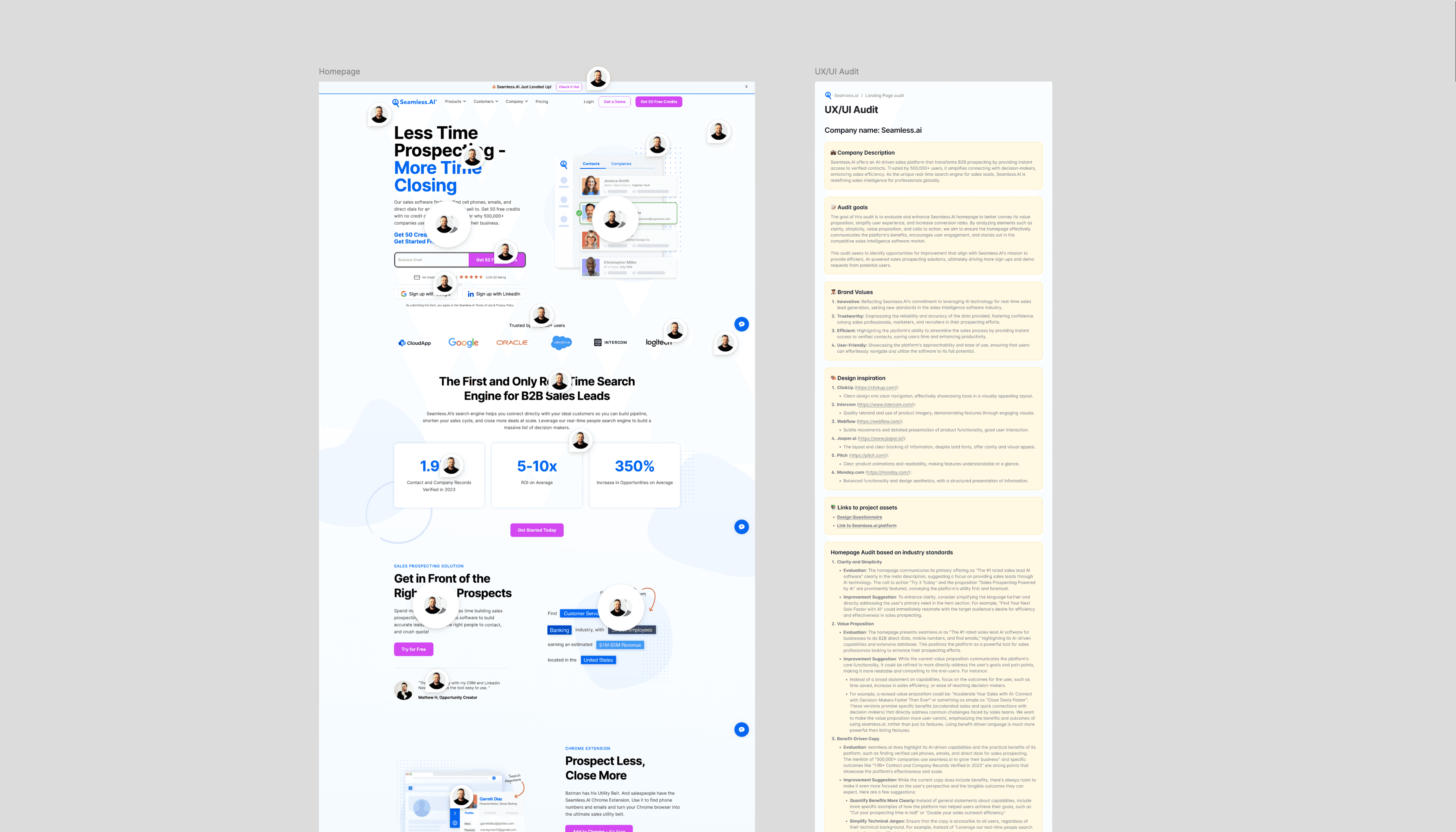
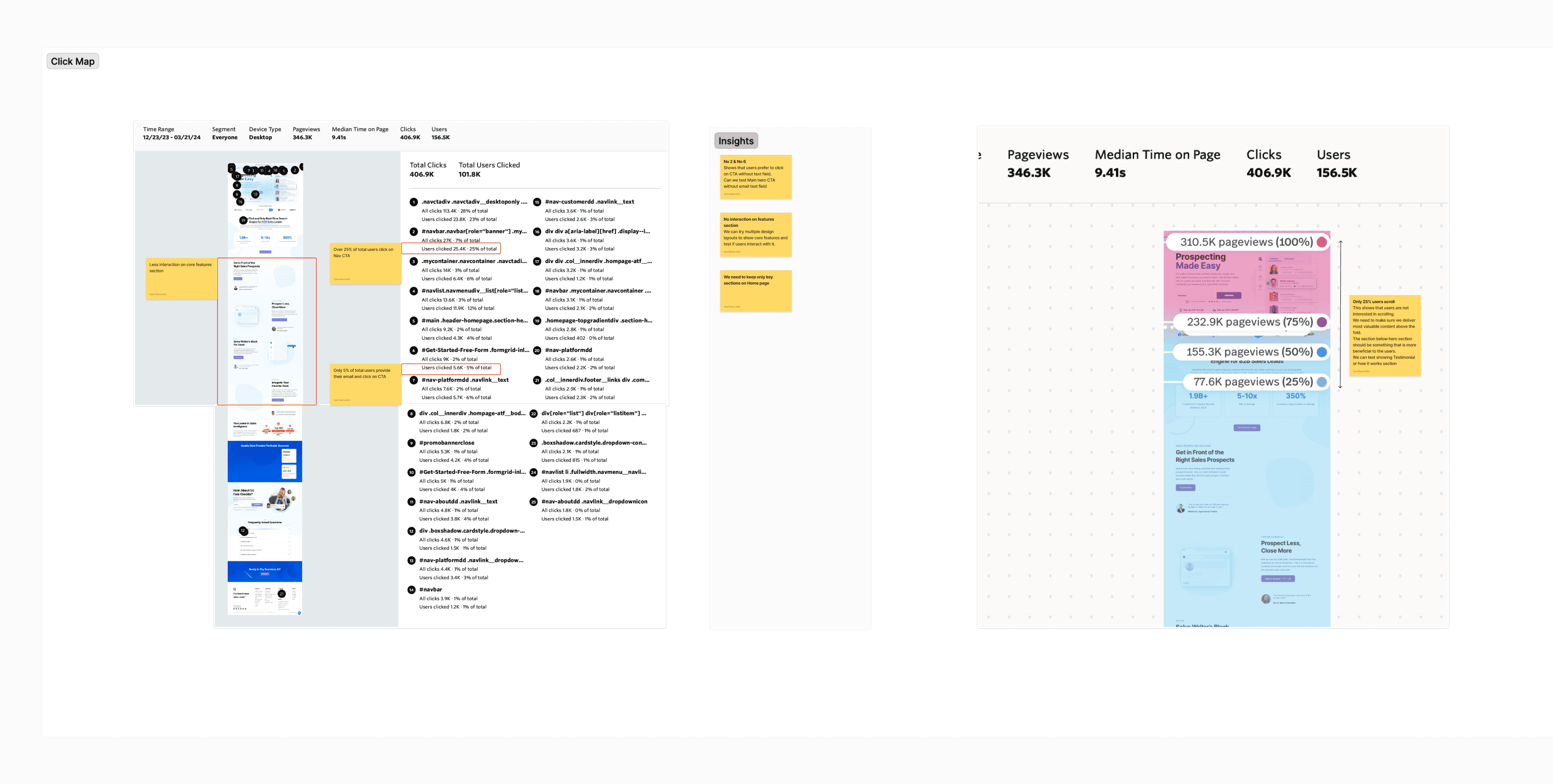
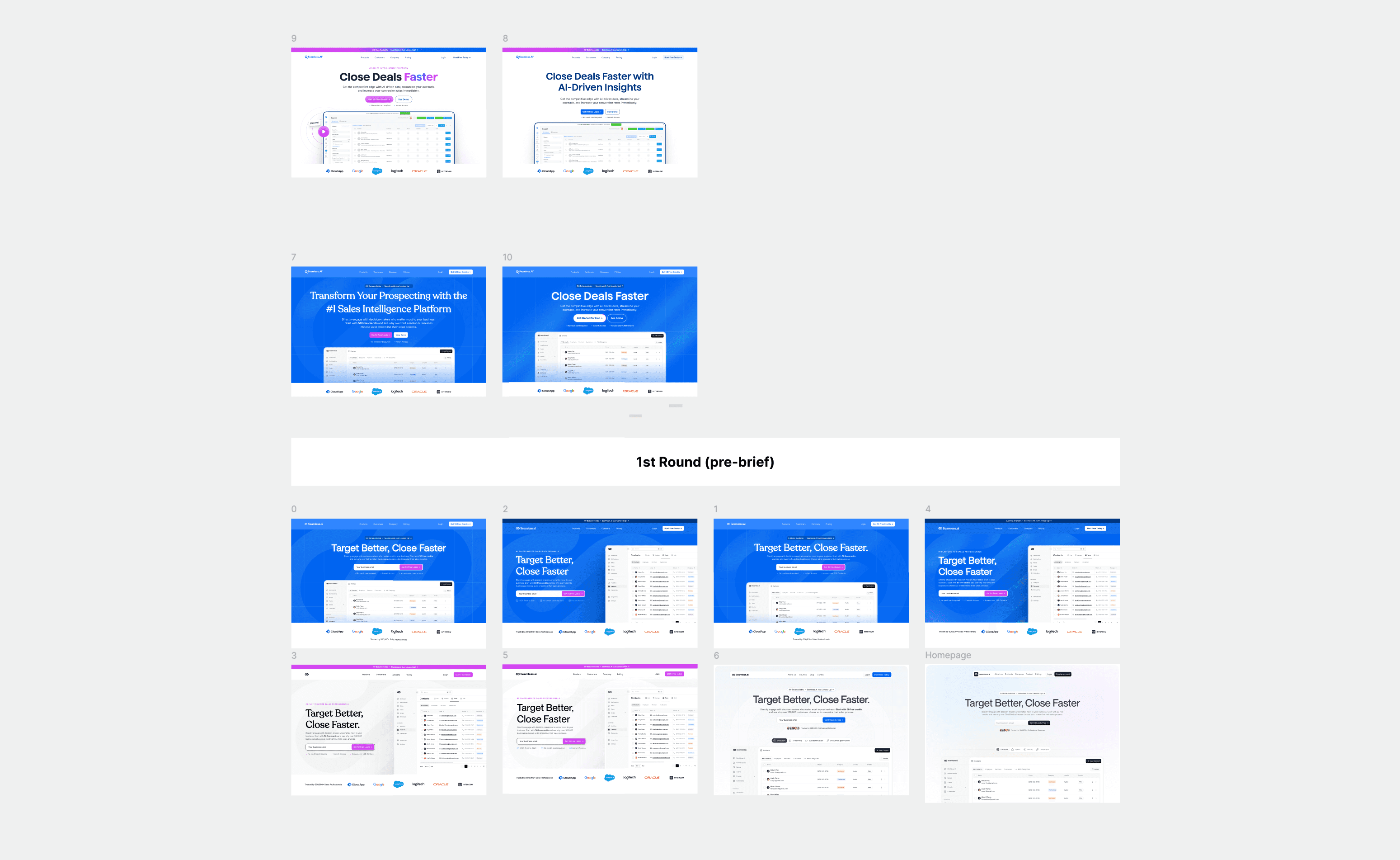
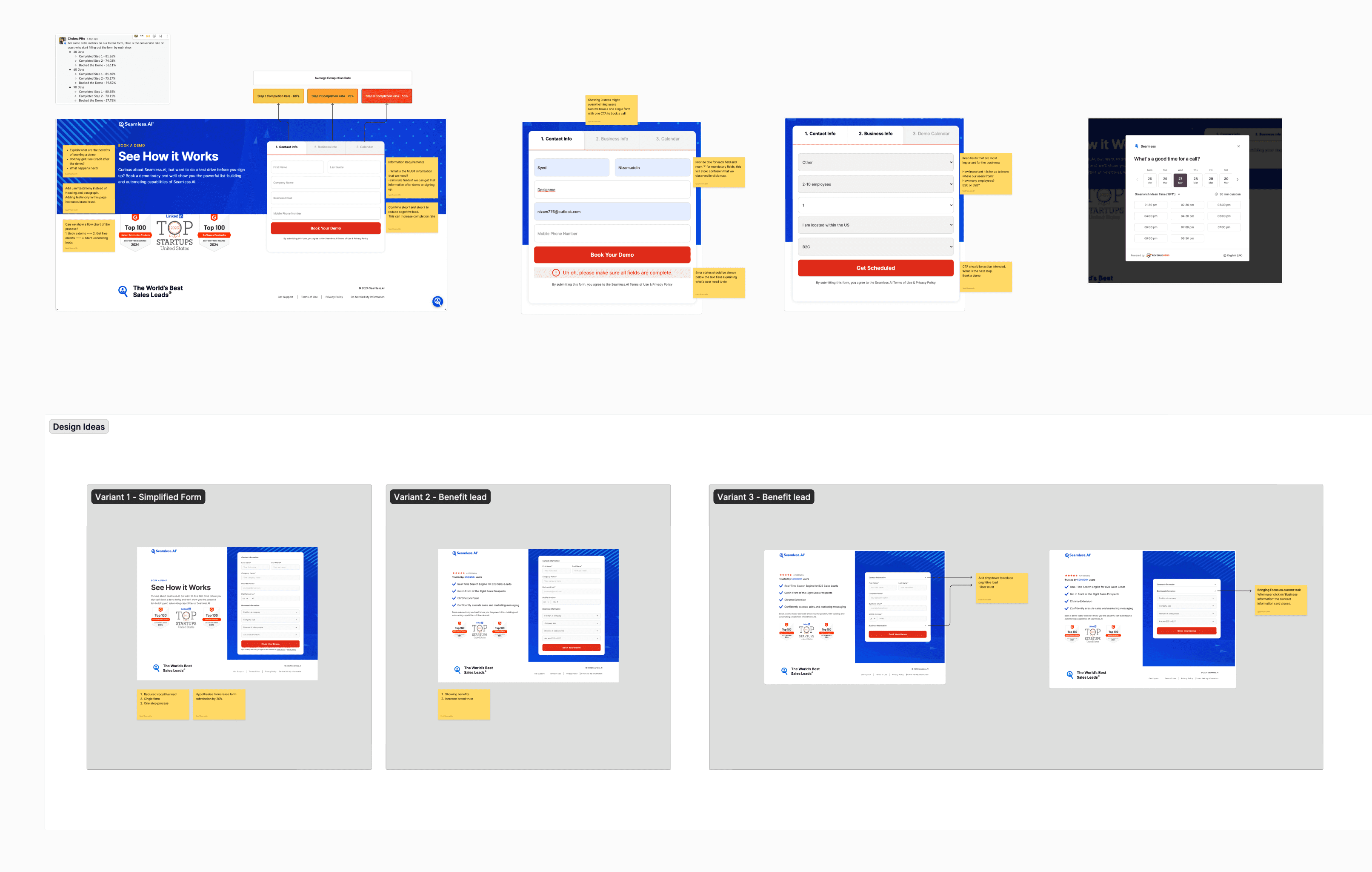
Image 1 of 4
Headline resultRolled out
+30%
Demo bookings
The redesigned demo page against the original, tested on the live site and rolled out.
| Test | Result | Decision |
|---|---|---|
| New homepage vs the existing one | WinRoughly doubled conversion, a clear answer in about 24 hours | Rolled out |
| New headline vs the original | WinWon by 12.5% | Kept |
| "Try It Free" call to action vs the others | WinOutperformed the rest | Kept |
| Redesigned demo page | WinDemo bookings up 30% | Rolled out |
What we deliver
Everything from the audit to the rollout, done by the team that designs and builds the variants.
Three days on your most important page, ending in one concrete change and a plan to test it.
GA4, Tag Manager and event checks, so every test measures what it claims to.
Each opportunity written as a test: the change, the expected result, one metric and a stopping rule.
Copy, design and build of every variant in Framer, Webflow or your coded site.
Live tests against the current page, monitored and called on the numbers agreed up front.
Winners rolled out to everyone, and every result written down in a log your team keeps.
Ways to start
Most teams begin with the audit sprint. If the first change earns its place, we move into a testing rhythm.
Three days on your most important page, for teams that want a clear first move.
Audits, variants and A/B tests page by page, for teams with steady traffic.
Why DesignMe
The team that runs the audit also designs and builds the change, so a good idea reaches your visitors fast.
Inside an audit
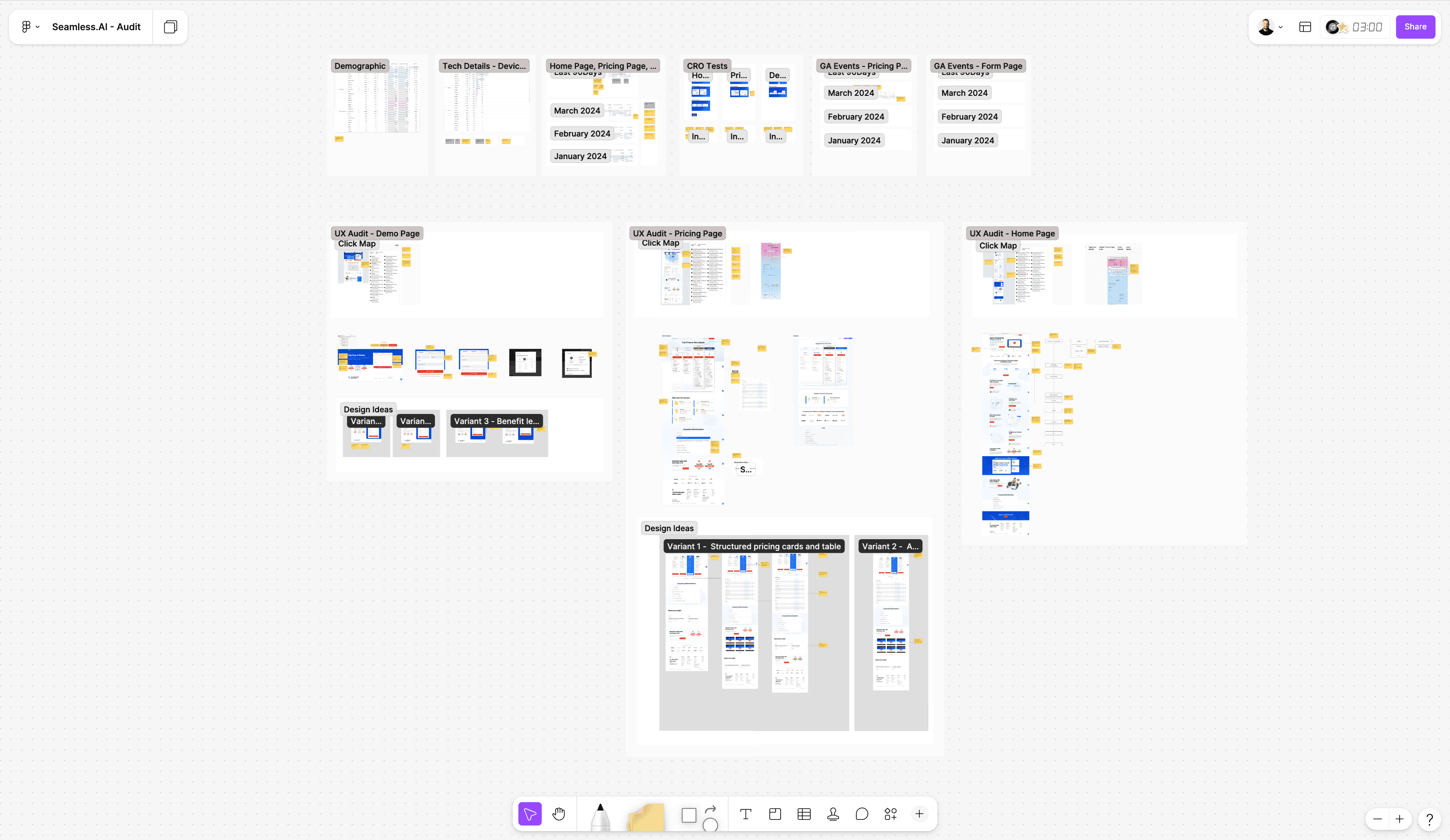
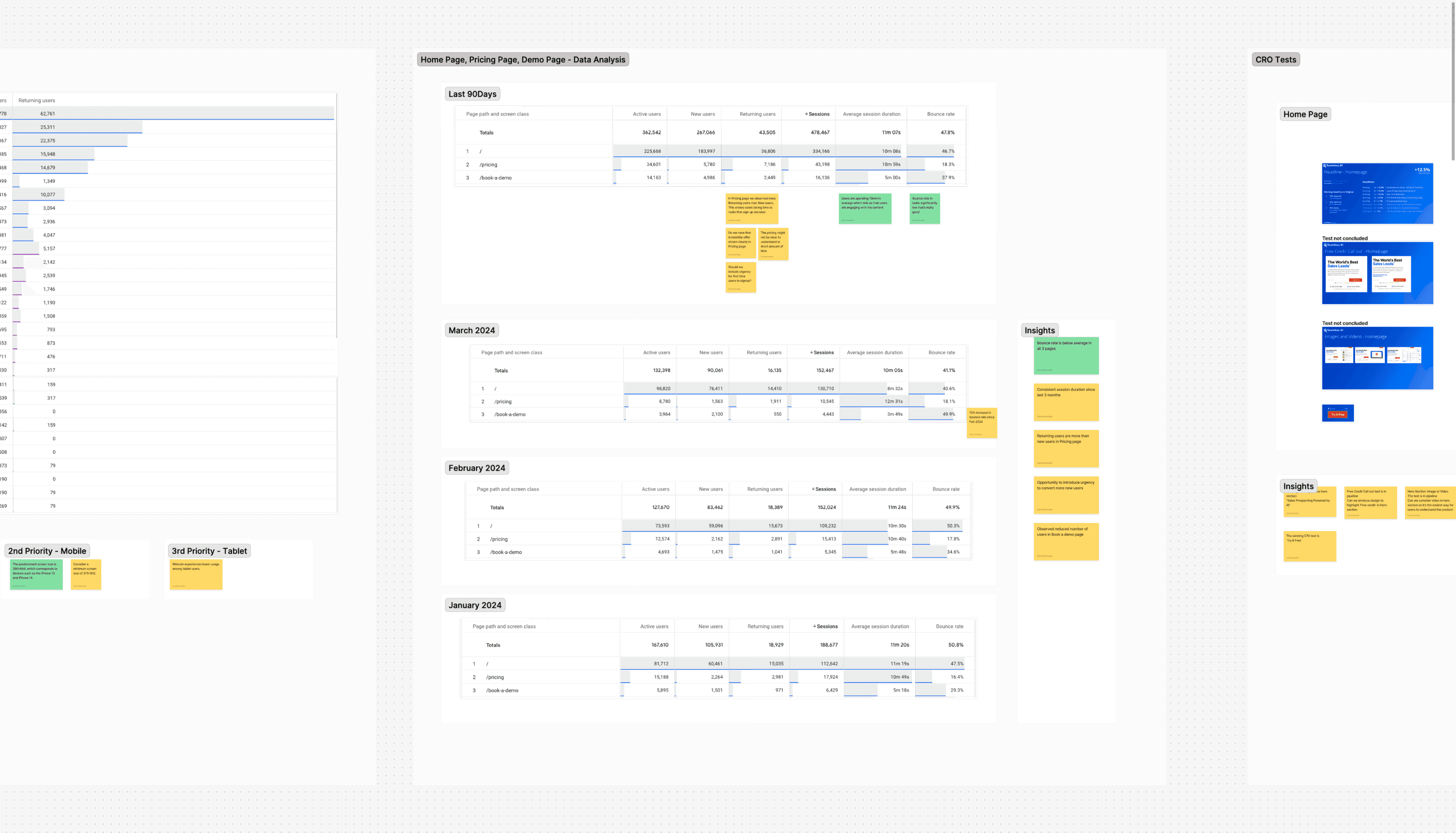
From the Seamless.AI audit: click maps and design ideas per page, and the analytics broken down month by month.
See how our UX audit works
The audit also runs on its own: we review your product or site against usability principles and your data, then rank every issue by impact and effort.
Testimonials
“I can strongly say DesignMe has elite and top tier talent on their team to get your next project completed!
Their work helped us increase engagement rate by 25%, boost user conversion rate by 11%, and reduce bounce rate by 20%.”
 Phil LaChancePrincipal Designer @Seamless.AI
“Their versatility and expertise are unmatched. Working with DesignMe has been incredible.
They quickly grasped our business model and vision, transforming our landing page, creating pitch decks, and more.”
 Brooks GammillCo-Founder @RecruitU
Faqs

Still having more questions?
Send us the page that matters most. We’ll tell you what we’d test first, and whether you have the traffic to test it.
An audit of your analytics, heatmaps and recordings, a check of your tracking, written hypotheses, the design and build of each variant, the A/B tests themselves, rollout of the winners and a log of every result. Most teams start with a three-day audit sprint.
It depends on your traffic. On Seamless.AI’s busy homepage a test gave a clear answer in about 24 hours. On smaller sites a test can take weeks. We estimate how long each test needs before it starts.
We check your traffic and conversion numbers against the size of change worth detecting before we plan any test. There’s no single threshold, and we’ll tell you plainly if a clean test isn’t possible.
We use behaviour data to pick bigger, clearer improvements and compare before and after. We explain the limits of that comparison and never present it as an A/B test result.
Google Analytics 4 and Google Tag Manager for events, Hotjar, Microsoft Clarity or PostHog for heatmaps and recordings, and your platform’s testing tool or PostHog for experiments. If your current tools measure reliably, we keep them.
Yes, on Framer, Webflow, Astro or Next.js, once we have access to the analytics and can publish changes. If the site needs foundation work first, we agree that scope before testing starts.
We do: copy, design and build. Rolling out a winner is part of the work. Larger rebuilds are scoped separately, usually as website design.
We log the result, what it tells us about the hypothesis, and whether to retry, rework or drop the idea. A losing test still tells you what not to ship.
We agree it with your team before any tool goes live: the consent banner, which tools load before consent, and masking of form fields and personal data in recordings.
Both work. The audit sprint is a short project with a clear output. The testing program runs month to month, as long as the tests keep earning their place.
If visitors don’t understand the product, a redesign usually comes first. If the site works but leaks, we test page by page. Seamless.AI did both: a full redesign, rolled out one tested page at a time.
No. We commit to clean measurement, focused tests and honest results. Lifts depend on your traffic, offer and product, and some tests will lose.
You've reached the end, so now…
We’ll help you map the right scope, team, timeline, and next steps.
Book a call