SaaS design agency
SaaS design that makes your product easy to try and buy
We design the website, signup, onboarding and product UI as one experience, so more visitors try your product and more of them stay.
- 8 weeks To launch Lightdash’s new site
- 18+ months Embedded with Quotient
Teams we’ve worked with
DesignMe is a SaaS design agency for product-led and self-serve software companies. We design the website, signup, onboarding and product UI as one experience, so more visitors try the product and more trials turn into paying users. SaaS clients include Quotient, Lightdash, Zinq AI and Workamajig. We launched Lightdash’s new website in 8 weeks and have worked inside Quotient’s product and site for 18+ months.
- SaaS clients
- Quotient, Lightdash, Zinq AI, Workamajig
- What we design
- Website, signup, onboarding and product UI, in one design language
- Fastest site launch
- 8 weeks, Lightdash
- Longest partnership
- 18+ months embedded with Quotient
Fit
Who we work best with among product-led SaaS teams
A good fit if
Probably not a fit if
- Not a fit: Sales-led teams that sell mainly through demos: see our B2B SaaS website design page
- Not a fit: Projects that only need a logo or a single landing page with no product work
- Not a fit: Teams that need a full engineering team to build the backend from scratch
Sound familiar?
People sign up. Then most of them never come back.
SaaS teams tend to lose users between the website and the first session. If a few of these sound like you, this page is for you.
Visitors open your pricing page and leave without picking a plan.
Plans named after internal tiers and limits in footnotes. We redesign pricing around who each plan is for, with one clear recommendation.
New users land on an empty dashboard with no next step.
We design first-run flows and empty states that lead to one meaningful result in the first few minutes.
The website got a rebrand. The product didn’t.
We bring the site, the app and the emails into one design language, so the promise and the product match.
Your signup form asks for company size and phone number before anyone sees the product.
We cut it to what you truly need, add social sign-in and move the rest into onboarding.
You ship features nobody finds.
They sit behind menus nobody opens. We design discovery into the product: contextual prompts, clear navigation and changelogs people read.
Your biggest leaks sit between the site and the product.
The signup page is the first screen of onboarding. We design both as one flow, so fewer people drop between them.
By stage
What SaaS teams need from first signup to scale
Seed
Get to a product people can try on their own, and a site that explains it in one screen.
What we usually deliver
- Brand foundations
- Launch website
- Signup and onboarding flows
- Core product UI
- Starter design system

Series A
Raise activation and conversion as traffic grows. Fix the leaks between site, pricing and first value.
What we usually deliver
- Website redesign
- Pricing page redesign
- Activation and onboarding sprint
- Product UI refresh
- Product explainer motion
Clients at this stage
LightdashSeries A
Refreshing the brand, the product and the website experience behind Lightdash’s $11M Series A
Growth / Series B+
Keep a growing product consistent and easy to learn as more teams ship features.
What we usually deliver
- Core experience redesign
- Design system at scale
- Feature discovery patterns
- Ongoing design subscription
Clients at this stage
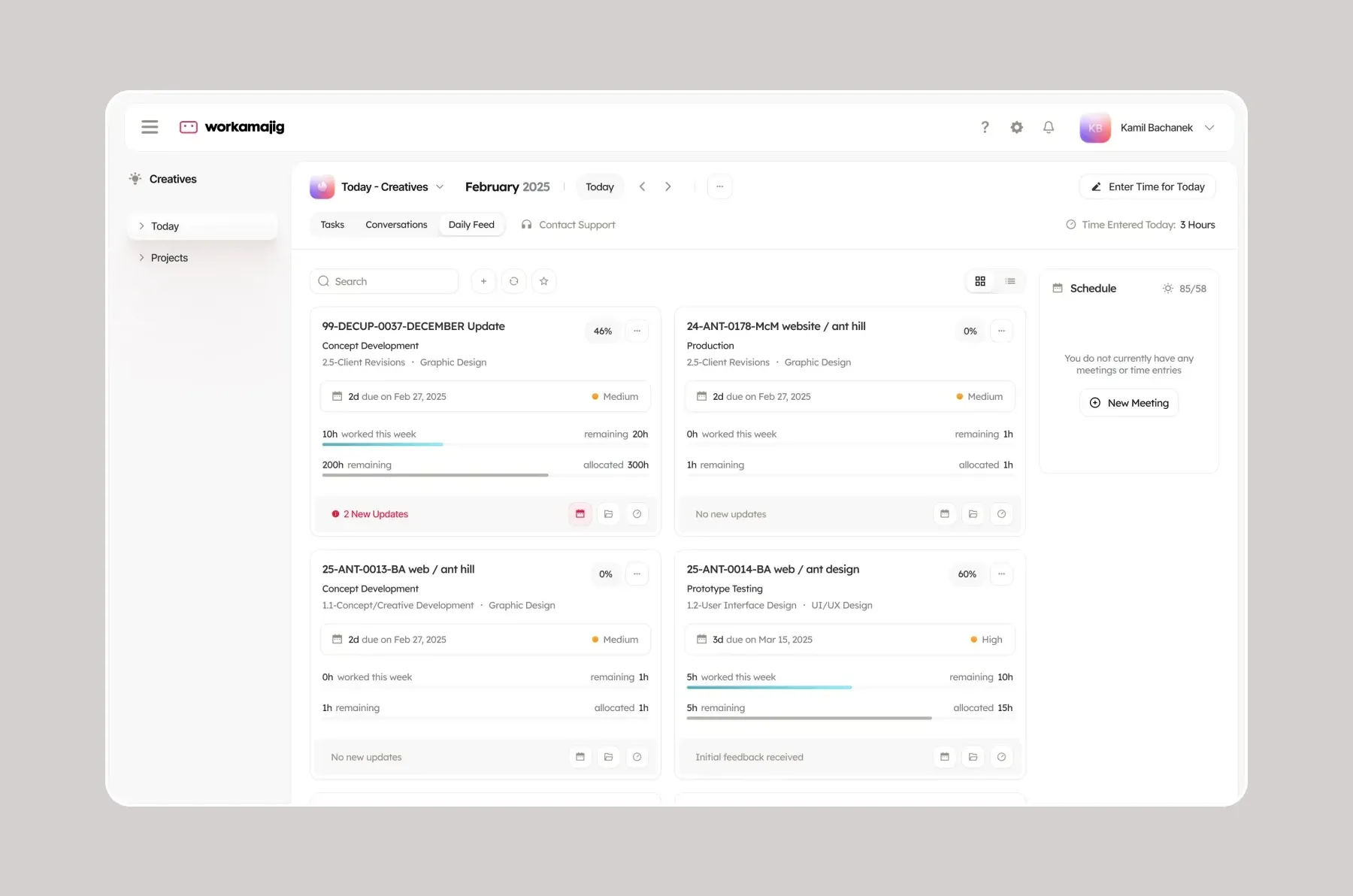
WorkamajigPrivate
Redesigning the core experience for a project management platform built for creative agencies.
Quick check
Is your SaaS easy to try without talking to anyone?
Tick what is true today.
What each score means
- 0 to 3Visitors are trying, then leaving The path from homepage to first value has gaps. Start with signup and the first session, where the biggest drop usually is. Book an onboarding review
- 4 to 6Working, with leaks The basics work. A focused sprint on pricing, empty states or the first run usually lifts activation fast. Talk through the leaks
- 7 to 8Strong self-serve motion Your funnel is in good shape. The next gains come from feature discovery, upgrade moments and a shared design system. Plan the next step
By the numbers
Most SaaS growth is won or lost in the minutes after signup.
37.5%
average user activation rate across 62 B2B SaaS companies (2025).
19.2%
average completion rate for onboarding checklists across 188 companies (2025).
1.5 days
average time-to-value for new users, from signup to the first real result (2025).
60%+
of business buyers now use a trial to evaluate software before they buy (2026).
Sources
- Userpilot: SaaS Product Metrics Benchmark Report 2025 (opens in a new tab)userpilot.com
- Forrester: The State of Business Buying, 2026 (January 2026) (opens in a new tab)forrester.com
Press Escape to close.
Facts and figures checked on .
Glossary: 5 terms, in one sentence each
Product-led growth (PLG)
A go-to-market model where the product itself drives signups, activation and upgrades, often through a free trial or free plan.
Activation rate
The share of new signups who complete the action that shows they got real value from the product.
Time-to-value
How long it takes a new user to reach their first meaningful result after signing up.
Free trial vs freemium
A free trial gives full access for a limited time. Freemium gives limited access with no time limit.
Product-qualified lead (PQL)
A user whose behavior inside the product shows they are likely to buy, such as inviting teammates or hitting a plan limit.
How we help
Services that matter for product-led SaaS
Product design
Signup, onboarding, empty states and core flows designed around the first real result a user gets.
Website design
A site that shows the product, explains pricing honestly and hands visitors straight into a trial.
Framer development
Fast, polished marketing sites your team can update the same day a feature ships.
Brand identity
One visual language for the site, the app and the emails, so the product feels like the promise.
Talk to us about your saaS project
We’ll help you map the right scope, team, timeline, and next steps.


What does a SaaS design agency do?
A SaaS design agency designs the parts of a software business people see: the brand, the marketing website, signup and onboarding, and the product UI.
The best ones treat these as one experience, because in self-serve SaaS the website hands people straight into the product.
How much does SaaS website and product design cost?
It depends on scope more than on page count. A focused landing page or product sprint costs far less than a full website plus a product redesign.
As a guide, boutique agencies usually charge $8,000 to $25,000 for a SaaS website and more for product work. Our SaaS website design cost guide breaks it down.
How do you improve SaaS onboarding?
Find the first action that predicts retention, then remove everything between signup and that action. Shorten the signup form, use sample data or templates, and design empty states that point to the next step.
We then measure activation before and after, so the change is proven.
Should our pricing page show prices?
For self-serve SaaS, yes. Buyers who cannot estimate cost tend to leave rather than ask. If enterprise deals need custom pricing, show the self-serve plans and add a clear "contact sales" tier next to them.
Should we offer a free trial or a free plan?
A free trial works when the product shows its value within days. A free plan works when value grows with usage or with more people on the team.
Either way, design the first session around one clear result, or neither model will convert.
Can you redesign our product without disrupting current users?
Yes. We audit what already works, ship changes in stages and keep familiar patterns where users rely on them. Big shifts get tested with real users before they roll out to everyone.
Do you work with our engineers?
Yes. We hand over organized Figma files with components, states and notes, review the build with your team, and can build the marketing site ourselves in Framer, Webflow or Next.js.
Should we hire a design agency or an in-house designer?
An agency gives you a senior team and range from day one, which suits launches and redesigns. An in-house designer makes sense once there is steady daily product work.
Many SaaS teams start with an agency, then hire and keep the agency for bigger pushes.
You've reached the end, so now…
Tell us what you’re building.
We’ll help you map the right scope, team, timeline, and next steps.
Book a call