AEO for SaaS: How to Get Your Website Cited by ChatGPT and Perplexity

Adrian KuleszoCo-founder
Table of contents
- How answer engines pick sources
- Answer the question first
- Put real numbers and names on the page
- Let the bots in
- Name the author and the date
- Be mentioned in other places
- One page per buyer question
- Refresh the numbers
- Add AI shortcuts to your site
- How to check whether it works
- What we saw on our own site
- FAQs
More buyers now ask ChatGPT, Perplexity or Claude who to hire and what it costs before they open Google, so the answer they get decides whether you make the shortlist. Getting named in that answer is called AEO, answer engine optimisation, and it shares most of its work with SEO, with a few extra steps below.
How answer engines pick sources
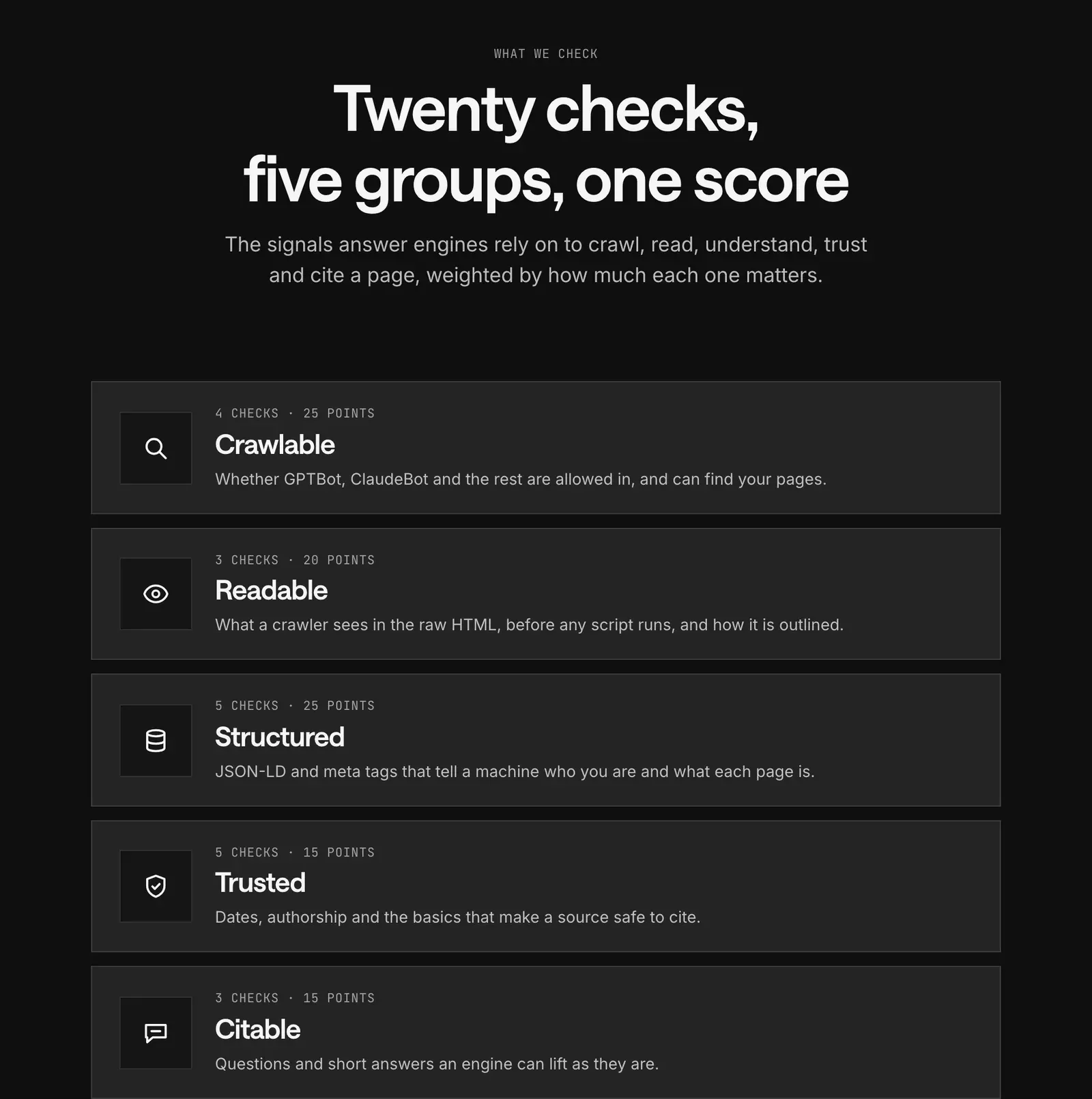
ChatGPT search, Perplexity and Google’s AI Overviews work in a similar way. They take the question, pull a handful of pages from a search index, and write an answer from those pages with links. The first job is to have a page that ranks and can be read, and the second is to make its sentences easy to lift into an answer.
Answer the question first
Open each section with the answer in one or two plain sentences, then explain. Write headings the way a buyer would search, such as “SaaS website design cost in 2026”, so the heading and the question match.
Put real numbers and names on the page
Engines quote pages that contain specifics, so use prices, timelines, named clients, project counts and dates. A sentence like “early-stage pitch decks run $2,500 to $5,000” can be quoted as it stands, and a line that says pricing varies gives them nothing to use.
Let the bots in
Check your robots.txt. OAI-SearchBot and GPTBot from OpenAI, PerplexityBot and ClaudeBot each have their own user agent, and blocking them takes you out of the answers those products build. Keep the main content as plain HTML text, since many AI crawlers do not run JavaScript, which means text that only loads after a script or sits inside a tab can be missed.
Name the author and the date
Give every post a byline, a publish date and an updated date, and add Article and Organization schema that says the same. Engines weigh recency and a named source, and a dated page with a real author gives them something to trust.
Be mentioned in other places
Answer engines lean on third-party sources as well as your own site, so Reddit threads, directories, review sites, podcasts and LinkedIn posts that name you all feed the answer. Pick the three places your buyers ask for recommendations, then answer questions there as the founder, with specifics.
One page per buyer question
List the ten questions a buyer asks before they hire or buy, such as cost, comparisons, how to choose and what to ask, and give each one its own page. Engines match a question to a page, so each question needs its own.
Refresh the numbers
Update prices and dates every quarter and change the updated date when you do. Engines favour recent pages, and a wrong price costs you trust with the reader who clicks through.
Add AI shortcuts to your site
We added two small components to designme.agency. The first sits in the footer under “Ask AI about DesignMe”, with an icon for each assistant, and every icon opens that assistant with a question about the company already filled in. The second sits on each article under “Summarize with AI”, with shortcuts for ChatGPT, Claude, Perplexity and Gemini, and each one opens the assistant with the article ready to summarise.
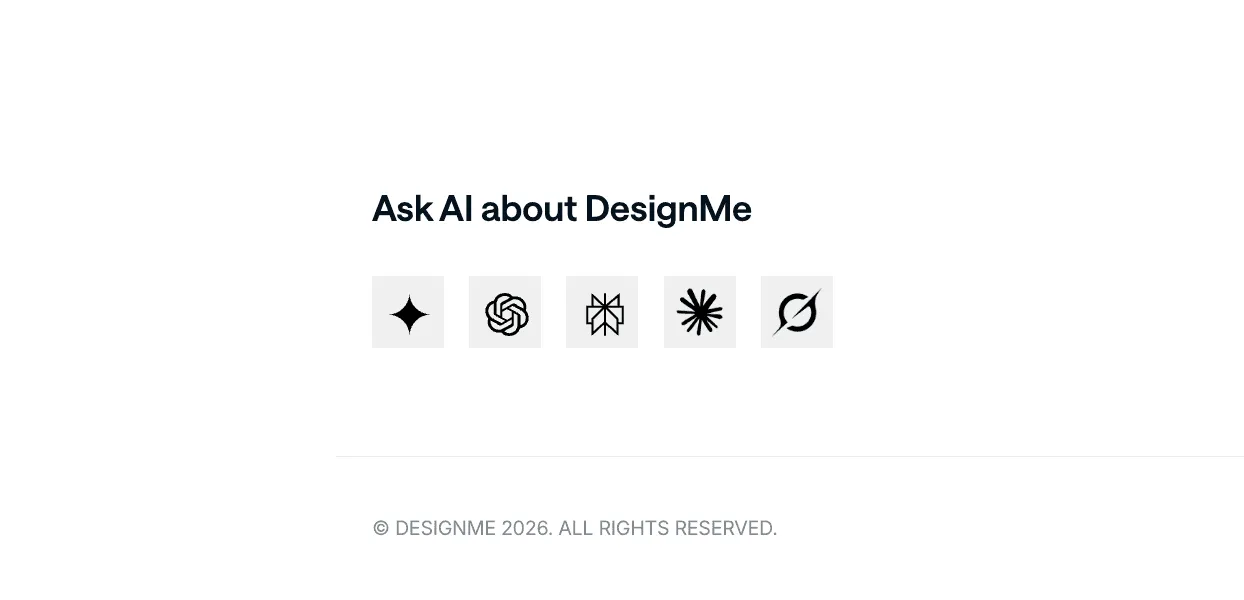
These shortcuts put your pages in front of readers who already use AI tools, and they give you a free test, since the summary a reader gets shows what an assistant makes of your page. Click your own Summarize button on a post and read the result, and if the summary misses the main point, rewrite the opening two sentences until it lands. Put your company name, what you do and a link to your pricing page in the footer prompt, so the answer an assistant gives about you draws on pages you control. Citations still depend on the steps above.
How to check whether it works
Write down the ten questions your buyers ask. Run each one through ChatGPT, Perplexity, Claude and Google, and record whether you appear, which pages get cited and who shows up in your place. Repeat monthly because results move, and it takes about an hour, which makes it the clearest way to see where you stand.
What we saw on our own site
Our Framer vs WordPress post, published 19 June 2026, is the first organic result for “framer vs wordpress for startups” in an incognito search as of 3 October 2026. Its opening lines state the difference between the two platforms in two sentences, which is the answer-first structure above.
We ran the same ten buyer questions through ChatGPT, Claude and Perplexity on 3 October 2026. DesignMe appeared in three of the ten ChatGPT answers, and in one answer each on Claude and Perplexity.
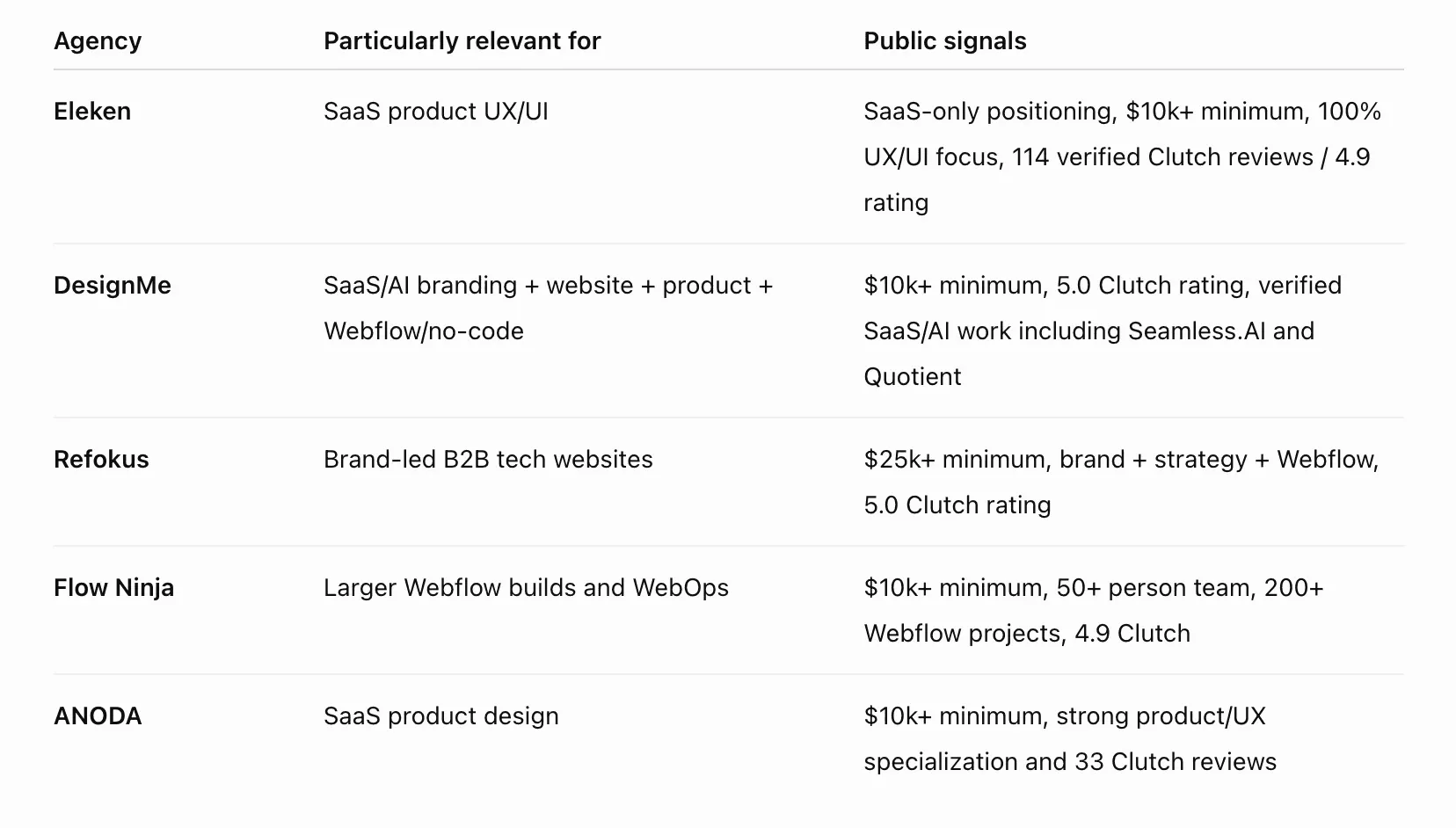
The three ChatGPT mentions came on the shortlist of B2B SaaS design agencies, the Webflow agency question and the AI startup agency question, and every one of them cited our Clutch profile, with no designme.agency page among the sources. For the Framer vs WordPress question, where our post is the first organic result on Google, ChatGPT cited Framer’s and WordPress’s own pages and did not name us. Perplexity’s one mention described DesignMe as a partner for funded B2B SaaS, AI and fintech startups that need brand, website, product and development from one senior partner.
DesignMe builds Webflow and Framer sites for funded B2B SaaS and AI companies. If you want your site reviewed for how it reads to answer engines, send it over: